
Quick answer
Yes, for most dogs with mild to moderate anxiety: exercise is one of the best-supported, most affordable tools you have. It has real limits, though. It doesn’t replace desensitization for true separation anxiety, and the wrong kind of exercise at the wrong moment can backfire, especially for dogs whose fear runs closer to trauma than everyday nerves.
- Mild to moderate, generalized anxiety: exercise helps. Consistency matters more than intensity.
- True separation anxiety: exercise supports the work, but it doesn’t replace desensitization training.
- Trauma-related fear: exercise can make things worse. Trigger stacking and recovery time matter more than the workout itself.
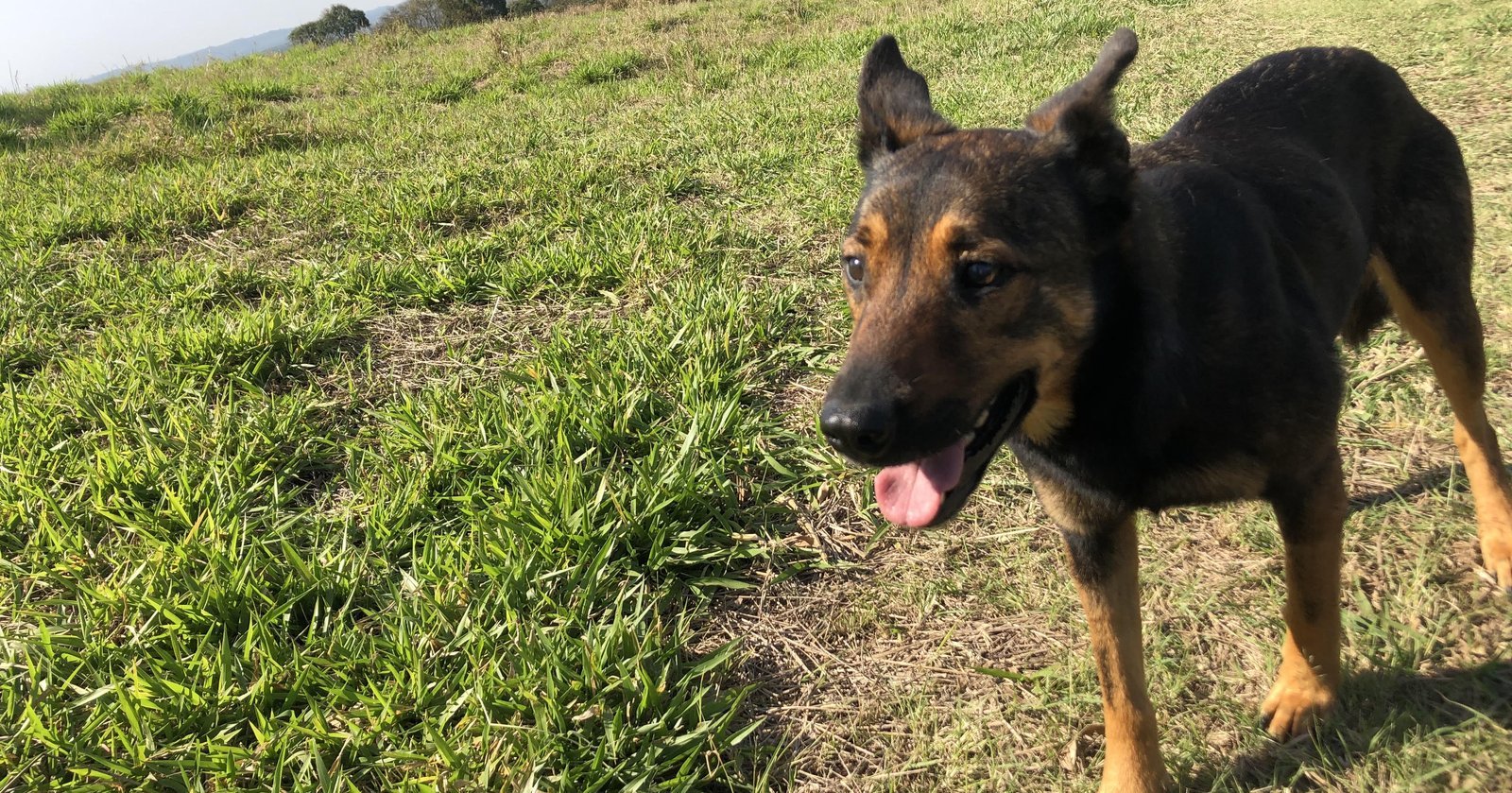
Your dog had the best walk of his week: sniffed every hedge, chased a squirrel he never had a chance of catching, came home grinning and worn out in the good way. Twenty minutes after you leave for work, he’s pacing by the door like none of it happened.
You did what you were told. Tire him out, and he’ll be fine. Except this time, it didn’t work.
For a lot of dogs, that advice is basically right. Regular exercise is one of the best-supported, most affordable things you can do for a mildly to moderately anxious dog, and the research backs it up.
It’s the same instinct behind wearing out a toddler before nap time: worn-out bodies are supposed to mean quiet minds, and for most dogs, they do. For a dog whose distress is real panic, not boredom, exhaustion doesn’t touch whatever’s underneath it.
The gap is between “helps” and “fixes.” Exercise doesn’t touch real panic the way it touches restlessness, and the wrong kind, at the wrong moment, can even make things worse. Here’s what decides which side of that line your dog lands on. (If you’re still piecing together whether what you’re seeing is anxiety at all, our full guide to dog anxiety covers the bigger picture; this one goes deep on exercise specifically.)
Does exercise reduce dog anxiety?
Yes. Tiira and Lohi (2015) tracked more than 3,200 dogs and found that daily exercise was the single biggest factor tied to noise sensitivity and separation anxiety: dogs who got less of it showed meaningfully more of both.
How we evaluate the evidence
That’s an association, not proof exercise causes calm on its own, and it’s fair to wonder if the causation runs backward: maybe anxious dogs simply get walked less because they’re harder to handle. Tiira and Lohi checked for exactly that. They found no real difference in trainability between dogs on shorter and longer walks, evidence against the reverse-causation theory. The simpler explanation held up: physical activity burns off the restless energy and stress hormones anxiety runs on.
Why exercise can backfire: trigger stacking
A 2022 study from Tufts University and the Center for Canine Behavior Studies (CCBS) followed 1,308 dogs and found that exercise’s payoff depends heavily on what kind of fear a dog has. Dogs with generalized anxiety showed real, measurable improvement from dog sports and structured activity, but for dogs with post-traumatic stress disorder (PTSD), the same study found the opposite: exercise coincided with the condition getting worse.
There’s a mechanism that helps explain why, and it has a name: trigger stacking. The AKC describes it as what happens when a dog moves through several stressful or arousing events without enough recovery time between them. Cortisol builds with each one, until something ordinary tips him past a threshold he’d normally handle fine.
Picture a Saturday like this: a chaotic dog park visit, lots of barking and chasing, a noisy car ride home, then you leave for two hours right after. None of those three things would panic your dog on its own. Stacked together, with no time to come back down between them, they add up.
Recovery time matters here, and it isn’t instant. Some dogs settle within an hour of a stressful event. Others carry the effects for a day or more.
That’s why the same walk that calms your dog on a quiet Tuesday can backfire on a day that already included a vet visit, a thunderstorm, or unfamiliar guests. More often than not, the exercise itself was fine; the day around it wasn’t.
The ASPCA’s separation anxiety guidance points at a related pattern: a dog who’s still keyed up and excited from one departure or reunion carries that arousal into the next separation. Give your dog real time to come down from excitement, whatever caused it, before the next goodbye.
How to build a routine that works
There’s no single magic number of minutes, and it’s worth being wary of any article that hands you one down to the decimal. What predicts results is consistency, not intensity. VCA Animal Hospitals puts it plainly: “It is better to take a 20-minute walk every day than a 2-hour walk on Sunday.”
Puppies, senior dogs, short-snouted (brachycephalic) breeds like pugs and bulldogs, and dogs with joint or heart conditions need the intensity dialed down and the frequency kept up. Loop in your vet before building a routine around long or high-impact sessions.
Calming activities (best before you leave, or on a stressful day):
- A 20 to 30 minute walk in a familiar, quiet area, sniffing as long as your dog wants
- A slow scent game: scatter treats in the yard, or hide small piles around a room
- A stuffed food toy or snuffle mat session
Higher-energy activities (save for later in the day, once things have settled):
- Fetch, tug, or a flirt pole
- A dog park visit, if your dog genuinely enjoys one
- A training class or an agility session
The cooldown, 10 to 15 minutes before you leave:
- Bring the energy down on purpose: a calm sit by the door, or a chew to settle into
- Handle your departure cues (keys, shoes, bag) without urgency, and skip the big emotional goodbye; a low-key exit helps more than an affectionate one
Weekly: one longer or novel outing, a new trail, a hike, a scent-work class, adds variety without needing to happen daily.
Physical tired isn’t the same as settled
A dog can be all tired out and still wound up underneath it. Burning energy and calming a nervous system are two different jobs, and doing one well doesn’t guarantee the other.
The same 2022 study that credited dog sports for generalized anxiety also flagged mental stimulation and habituation as some of the strongest overall levers for improvement, right alongside physical activity.
Sniffing, scent games, and slow, unhurried exploration are backed by their own body of calming evidence, separate from straightforward cardio. Nobody has run a head-to-head study pitting a sniffy walk against a hard sprint. But the pattern across the research is consistent: activities that engage a dog’s mind, not just their legs, keep showing up as one of the strongest levers there is.
Where exercise fits in your dog’s plan
Exercise is one of the most accessible tools you have for a dog with mild to moderate anxiety, and the research genuinely supports it. But it works as a support for resilience, not a cure for panic.
A dog with true separation anxiety still needs the same desensitization work any specific fear needs, and exercise doesn’t replace it. If you’d rather follow a structured, step-by-step plan than piece it together on your own, a program built specifically for anxiety and separation issues walks you through exactly that.
Common questions
Does more exercise really reduce anxiety in dogs?
For most dogs, yes. Tiira and Lohi (2015) tracked more than 3,200 dogs and found daily exercise was the single biggest factor tied to noise sensitivity and separation anxiety: dogs who got less of it showed meaningfully more of both.
Can exercise make a dog’s anxiety worse?
It can, for some dogs. A 2022 study from Tufts and the Center for Canine Behavior Studies found exercise helped dogs with generalized anxiety, but coincided with things getting worse for dogs with PTSD-type fear. Trigger stacking is usually the mechanism: too many stressful events without enough recovery time between them.
How much exercise does an anxious dog need?
There’s no single magic number. VCA Animal Hospitals puts it well: “It is better to take a 20-minute walk every day than a 2-hour walk on Sunday.” Consistency beats intensity, and puppies, seniors, short-snouted breeds, and dogs with joint or heart conditions need the intensity dialed down.
Is a tired dog automatically a calm dog?
No. Physical tired isn’t the same as settled. Burning energy and calming a nervous system are two different jobs, and mental stimulation (sniffing, scent games, slow exploration) is one of the strongest levers alongside physical activity.
What is trigger stacking?
It’s what happens when a dog moves through several stressful or arousing events without enough recovery time between them. Cortisol builds with each one, until something ordinary tips the dog past a threshold they’d normally handle fine.
Sources
- Tiira & Lohi (2015) — Early Life Experiences and Exercise Associate with Canine Anxieties, PLOS ONE
- Dinwoodie, Zottola & Dodman (2022) — CCBS summary, Journal of Veterinary Behavior
- AKC — What Is Trigger Stacking? How to Handle an Overly Stressed Dog
- ASPCA — Separation Anxiety
- VCA Animal Hospitals — Healthy Exercise for Dogs